
March 13, 2026: DOs and DONT’s of Investing During Turmoil
Let’s start with the don’ts.
Don’t…
Try to time the market on ANYTHING - I don’t care if it’s stocks, bonds, options, gold, oil, or anything else. Just don’t. The odds are not in your favor.
Doomscroll. The more news media and headlines you consume, the more likely you will make emotional investing decisions rather than rational ones. Social media skews the way we see the world.
Constantly check your portfolio. The market is volatile right now and these swings, combined with emotional news headlines, could cause you to make unwise investing decisions.
Panic sell (or buy). Panicking is counterproductive and can lead to poor decision-making. Remember your long-term plan and stick to it.
And…
Do…
Keep things in perspective. You can only control small things - you cannot control the outcome of a war, oil prices, stock prices, etc. But there are things within your control that can give you peace and confidence.
Talk to your advisor. If you have questions or concerns about the market, your advisor should understand and explain how it affects your financial plan.
Review your long-term plan and stick to it. When you update your plan you can put the current market volatility into perspective - it may not be as dire as you believe.
Identify opportunities to rebalance and tax loss harvesting. A review of your investments may reveal opportunities to stay on your target allocation or do tax-loss harvesting.
The chart below shows the S&P 500 index before and after major conflicts going back to 1950. Some of the conflicts have prolonged impacts on markets while others shake off the volatility quickly. The average return of these events is positive after 24 months of the event.
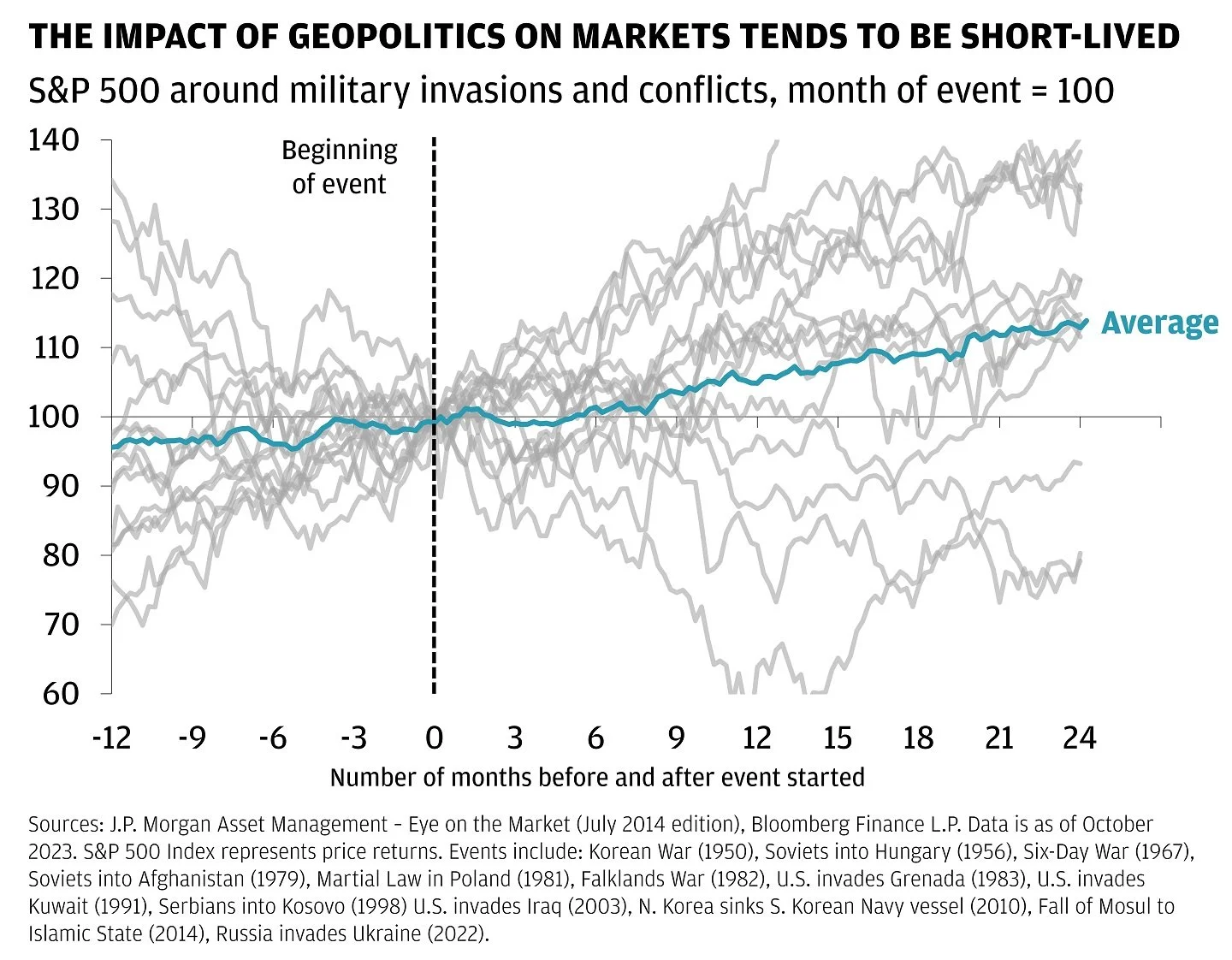
There is heightened uncertainty - no one knows precisely what the outcome of this conflict will be or when it will end. A long-term perspective can help soothe some anxieties about the volatility.
One more chart…
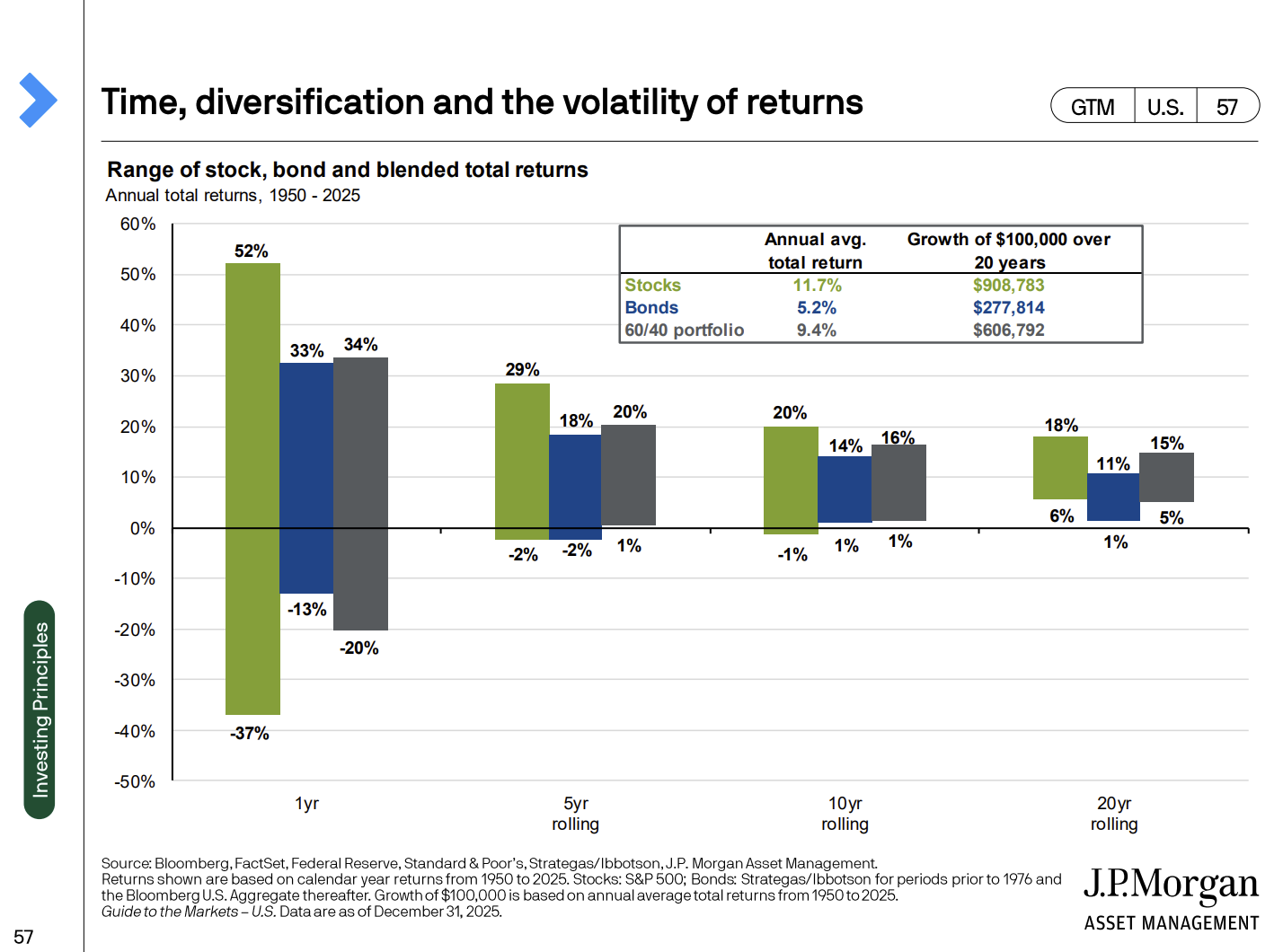
The idea is simple - the longer you hold (this is a 60/40 portfolio), the narrower your range of returns becomes (lower volatility) and the more likely returns are going to be positive. Volatility and uncertainty happen, but you have to stick it out to reap the benefits of investing.